1. Kitchen grease buildup
Cooking grease goes down the kitchen drain as a liquid and solidifies as it cools inside the pipe. Over months, the grease layer thickens until water backs up into the sink. Houston's warm climate slows the problem slightly (grease stays liquid longer in a pipe that runs through warm soil), but it does not prevent it. The fix is straightforward: a drain cable breaks through the plug and restores flow. Hydro jetting scours the full pipe wall and removes the grease that the cable pushes past. Jetting lasts longer because it cleans the surface rather than punching a hole through the buildup.
2. Tree roots in the sewer line
Sewer lines carry moisture, and tree roots grow toward moisture. A root finds a joint or a hairline crack in a clay or cast-iron sewer pipe, enters the line, and expands inside it until it blocks the flow. Live oaks, pecans, and crape myrtles are the most common offenders in Houston yards. The first sign is a slow main drain: every fixture in the house drains sluggishly at the same time, rather than just one sink or tub.
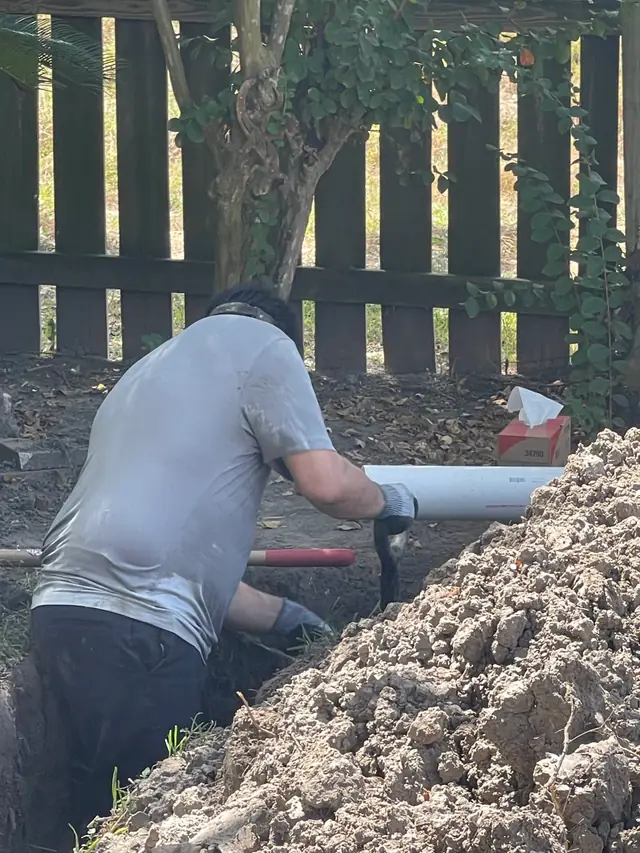
A sewer camera inspection confirms the diagnosis. The camera shows exactly where the root mass sits, how far it extends, and whether the pipe wall is still intact behind it. If the pipe is sound, hydro jetting cuts the roots and clears the line. If the root has broken the pipe, the damaged section needs replacing. Abacus handles both, including tunneling under slab foundations to reach the line without cutting the finished floor.
3. Hair and soap buildup in the shower drain
Hair collects on the drain crossbars and tangles with soap residue into a mat that gradually narrows the opening. The shower drains slower over weeks, and eventually the basin holds standing water. A drain cable clears the blockage. A mesh drain cover (a few dollars at any hardware store) prevents most of the recurrence by catching hair before it enters the pipe.
4. Bellied sewer line
A belly is a low spot in a sewer line where the pipe has sagged. Water pools in the dip instead of flowing toward the main. Solids settle in the pool, and over time the belly becomes a recurring blockage that no amount of jetting fixes permanently, because the pipe's grade is the problem, not what is inside it. Houston's expansive clay soil is the usual cause: the soil shifts, and the pipe moves with it.
A camera inspection identifies the belly and measures how deep it is. A minor sag in an otherwise sound pipe may not need repair; the homeowner monitors it and jets it annually. A severe belly, one that holds standing water across the full diameter, needs excavation and re-grading of that section of pipe. The technician replaces the sagged length with new pipe set to the correct slope and backfills the trench with stable material to prevent a repeat.
5. Washing machine drain overflow
The washing machine drain line is one of the narrowest in the house (typically 2 inches) and handles the highest single-burst volume: the machine pumps 15 to 20 gallons in under two minutes during the spin cycle. Lint, fabric softener residue, and small clothing fibres accumulate inside the pipe and restrict flow until the pump outpaces the drain and water spills onto the laundry-room floor.
A cable run through the standpipe clears the immediate clog. Hydro jetting is worth considering if the line clogs repeatedly, because the softener residue coats the pipe wall in a way that cables do not remove. A lint trap on the discharge hose (available at hardware stores) reduces the fibre load reaching the drain.
When to call a plumber vs when to try a plunger
A plunger works on a single fixture with a trap-level blockage: a toilet, a sink, a tub. If every drain in the house is slow at the same time, the blockage is in the main line and a plunger will not reach it. If a drain clogs, clears with a plunger, and clogs again within a few weeks, the obstruction is deeper than the trap and needs a cable or a jetter.
Abacus Plumbing clears residential and commercial drains across Houston and Austin, 24 hours a day. Drain cleaning, hydro jetting, sewer camera inspection, and sewer line repair. Call (713) 766-3605.